The latest issue of Femnista has been released. This month's theme is Classic Hollywood.
In this issue: James Cagney, The Philadelphia Story, Audrey Hepburn, Sherlock Holmes, Mae West, Sorry Wrong Number, John Wayne & Maureen O’Hara, The Honeymooners, Judy Garland, East of Eden, Norma Shearer.
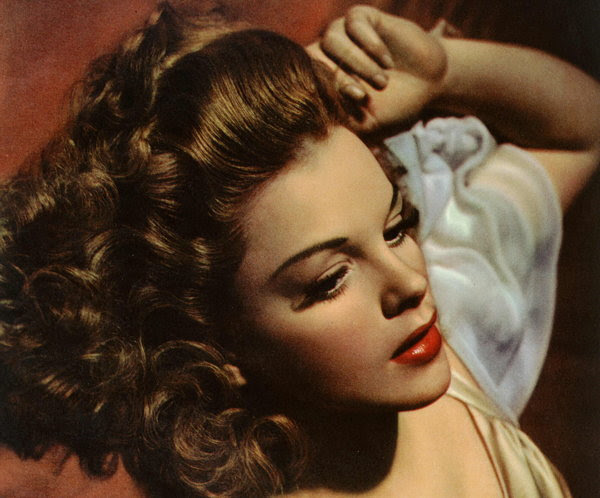
Yours truly contributed an article on the World's Greatest Entertainer, Judy Garland! Check it out!
It’s
been awhile since I updated this blog. I got busy with the holidays and then
catching up, and then with writing. I’ve completed my second draft on the Great
Depression novel and am letting it sit for a bit before I tackle it again. Not
really sure where to go from here; it needs more drafts to be sure. And I am trying
to prepare for the next WIP. It’s a never-ending, vicious circle.
One
of the subjects in my Great Depression WIP is abusive marriages. Not to give
away too much, due to desperate times, my heroine is married off young to a man
much older than she is. Then the marriage becomes abusive. It happened back
then, it still happens today. Unfortunately in the 1930’s – and before and long
after- abused women had nowhere to turn to. Friends and family may have been
well-aware of the situation, but nothing could be done really. The church
offered no answers really; divorce was considered a sin by many Christians.
Indiana
has an interesting history when it comes to divorce. While frowned upon by most
of society – and I am sure most Hoosiers- in the 1830’s Indiana passed a bill making
it easier for women to obtain a divorce and keep the children. That was
monumental for the 19th century! It was so easy to obtain a divorce
in Indiana, that Heinrich Schliemann, the man who rediscovered the lost city of
Troy, came here to obtain one as well. Of course while it was helpful to have
such a liberal law, the majority of women did not make a beeline to the Hoosier
state to free themselves of their husbands. Divorce carried a social stigma- if
you were a divorced woman you were considered immoral and the blame of your
failed marriage was laid at your feet. By the 1930’s divorce was too expensive
that many couples opted to remain married because they could not afford to
separate.
My
heroine wants a divorce but various circumstances prevent her from obtaining
one. Her story is partially modeled after that of a woman’s in my family. She
was shackled to a violent man and was only freed through his death. While I
believe in making marriage work and for better and for worse, I am grateful to
live in an age where women can break away from their abusive spouses if they
can.
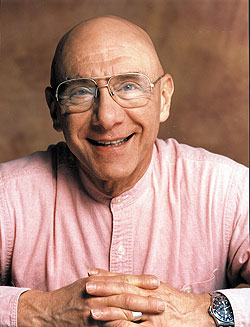
Dr.
Bernie Siegel has long observed how relationships with animals have helped his
patients, alleviating their suffering and heartbreak. Now, he’s gathered many
inspiring true stories, including delightful tales from the “Siegel Family Zoo”
where “squawks, purrs, chirrups, squeaks, barks, and so on” fill the house.
Other stories reveal animals as teachers and messengers, doctors and nurses,
healers and miracle workers, and often as guileless clowns. Bernie writes that
animals are here to show us how to be nonjudgmental and live better, healthier
lives. Let these stories teach you, and apply their lessons to your daily life.
If you have an animal, an appreciation for the inspirational, or simply the
need for a smile, you’ll treasure this celebration of animals as a source of love,
wisdom, and miracles.
A portion of the
publisher’s proceeds from this book will aid Ark Angel Society.
AUTHOR DESCRIPTION
Retired
surgeonBernie S. Siegelspeaks, writes, and runs support
groups in his effort to empower patients. His books includeLove, Medicine & Miraclesand365
Prescriptions for the Soul. He lives in Woodbridge, Connecticut. Freelance
writer and editorCynthia J.
HurncowroteNo Buddy Left Behindwith Terry Crisp andThe Art of Healingwith Bernie S. Siegel. She lives in
Somerset, England.
MY THOUGHTS
I
am more than a little biased for “Love, Animals and Miracles,” because I was
one of the contributors. The story of my Basset Hound, Gracie, and how she came
to us was included in this anthology. Grace’s story is one of many; how with
her big heart and unconditional love, she worked a miracle in all of us. I
believe that one of the stories in Dr. Siegel’s book will touch your heart and
maybe inspire you to open your life to the love of an animal. It will be one of
the greatest loves you’ll ever know.
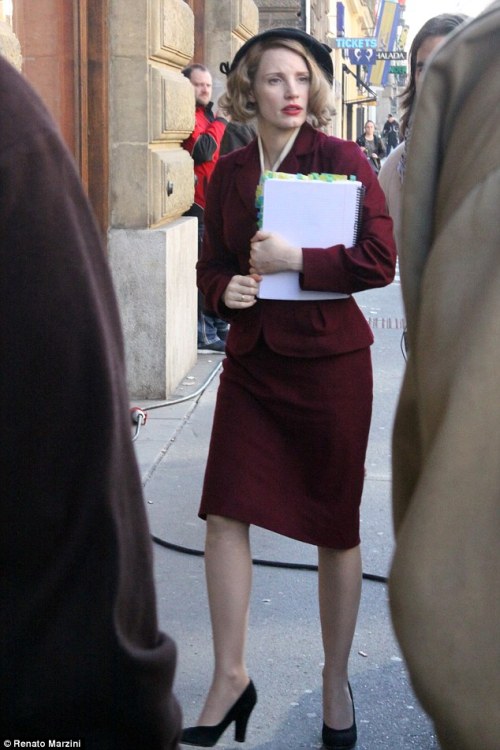
I am so flipping excited! Jessica Chastain is finally in the midst of filming “The Zookeeper’s Wife!” The movie is inspired by the book by Diane Ackerman and the true life story of Antonia and Jan Zabinski. The couple managed the Warsaw Zoo during WWII and hid hundreds of Jews from the Nazis. I have been hearing rumors about this movie for a couple years now and am ecstatic that it is officially in production!!!
I don’t usually watch movies at the theater; too pricey, but I may make an exception for this one!!!
Southern
trees bear strange fruit
Blood on the leaves and blood at the root
Black bodies swinging in the southern breeze
Strange fruit hanging from the poplar trees
Pastoral
scene of the gallant south
The bulging eyes and the twisted mouth
Scent of magnolias, sweet and fresh
Then the sudden smell of burning flesh
Here is
fruit for the crows to pluck
For the rain to gather, for the wind to suck
For the sun to rot, for the trees to drop
Here is a strange and bitter crop
Sort
of haunting, isn’t it? That is Lady Day herself, Billie Holiday singing a long,
forgotten song, called “Strange Fruit.”
The
song – which was originally a poem called “Bitter Fruit” was inspired by the
lynching’s of Thomas Shipp and Abram Smith. They were two young African
American men who had been accused of murder and rape in 1930. A crowd– men,
women and children were all present- took them from their cells; the young men
were beaten and hung. A third young man was spared the noose in the nick of
time.
This
sounds like a story that had taken place in the Deep South, right?
The
lynching’s took place right here in Marion, Indiana.
My
grandmother used to tell me that when I was researching our genealogy, that
when I climbed up the family tree, beware of what might fall out of it. I think
the same applies to doing research on your home state.
Indiana
has a checkered past.
We
Hoosiers, particularly the Quakers, were involved in the Underground Railroad
and believed in abolition. Many of our young men fought for the North during
the Civil War, my great-great grandfather was one of them. Yet we had some Jim
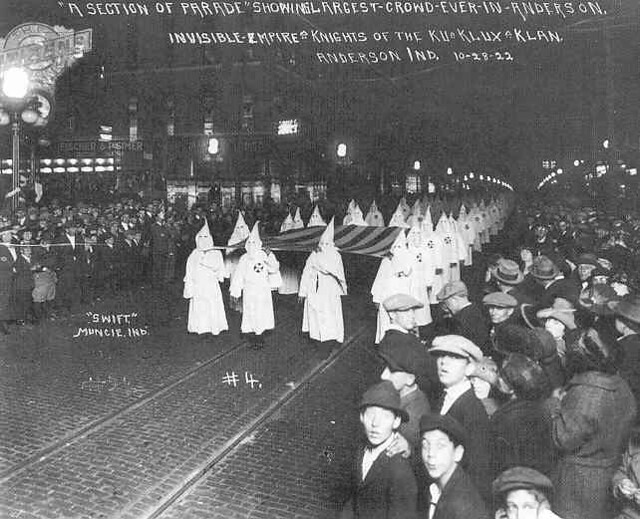
Crow laws here, along with segregation. In 1924, the KKK had its rebirth here
in Indiana. There are many sun down towns in Indiana- towns that do not permit
African Americans or ones that do not want them around after dark. Growing up,
when I watched “To Kill a Mockingbird,” my parents said that some of what went
on in that movie, happened in Indiana when they were growing up.
In
writing the first draft of my Indiana novel, I didn’t mention racism once. I
was aware of what went on in Indiana’s past, but I didn’t think it was my place
to write on a subject that I have no concept of. Also, it didn’t really fit in
with my story.
Or
so I thought.
However,
in the last few weeks, I realize that if one writes about Indiana and the
1930’s, the racism can’t be ignored. There had to be a way for me to show what
it was like in those days without trying to take advantage of someone else’s
pain.
As
a fan of “To Kill a Mockingbird” and “The Help,” I have read some critical
reviews that implied some irritation that the African American characters of
those novels needed help from the white characters.
What
if an African American character helps my heroine, or tries to?
As
much as I like the song, it won’t be featured in my novel. My story ends in
1936 and the song was sung in 1939. The point is clear: we must confess our
sins and try our damnedest not to repeat them. We must do what we can to atone
for our mistakes and when we leave behind the world, we must leave it behind a
better place.
Somehow,
I was able to finish the first draft of my Great Depression novel a couple
weeks ago, which is tentatively titled, “Thursday’s Child.” I’m unsure if that
is a good fit for the story, but that’s what I am calling it for now. At least
until something better comes along. The majority of it is based around
Prairieton, Indiana, which is a small little burg off of Terre Haute. Terre
Haute does make a couple cameos; how can it not?
As
I mentioned in my last post, Indiana literature is pretty non-existent. It
wasn’t always like that though. From 1880 to 1920, Indiana went through a
Golden Age in literature. There were some big named authors who came from
Indiana.
Booth
Tarkington wrote “Gentlemen from Indiana,” “Alice Adams” and “The Magnificent
Ambersons;” he also won the Pulitzer not once, but twice!
Gene
Stratton Porter, best known for “A Girl of the Limberlost,” “Freckles” and my
personal favorite, “The Harvester” was from northern Indiana. She was also an
environmentalist, a preservationist and an entrepreneur. Two years ago I went
to her house in Rome, as mentioned in this entry.
The
poet, James Whitcomb Riley was Indiana’s poet and he captured much of the
Hoosier spirit and colloquialisms in his works. He wrote a poem called “Little
Orphant Annie,” which was the inspiration for that cute little, redheaded
orphan as well as the Raggedy Ann doll. Have you ever heard of the gruesome
“Who’s Ear” story? That is attributed to him.
The
Dreiser/Dresser brothers, Theodore and Paul hailed from Indiana. Theodore
Dreiser wrote unconventional literature such as “Sister Carrie” and “An
American Tragedy,” scandalizing the Victorian sentiments of the public. His
older brother, Paul Dresser was known for penning Indiana’s anthem, “On the
Banks of the Wabash, Far Away.” If you were forced to learn that song in the 4th
grade, you have him to thank for it.
The
best known might be Lew Wallace. Yes, the man who wrote the epic Biblical
narrative, “Ben Hur: A Tale of Christ,” came from Indiana. After from an
illustrious military career, he retired to Crawfordsville, Indiana. Unable to
defend his religious beliefs, he did in depth research on the life of Christ
and the period, which led to his masterpiece.
There
are a few other authors worth mentioning: Jessamyn West, who I only lately
discovered thank to my aunts, was the author of “The Friendly Persuasion” and
“Cress Delahenty.” Kurt Vonnegut, who I admit to never having read, wrote “Slaughterhouse-Five.”
A current author who I have come to appreciate is Amy K. Sorrells, is known for
“How Sweet the Sound” and is the only Christian author I like anymore.
Maybe
one of these days I’ll be coupled with these great Hoosier men and women.
When
Truman Capote invited Harper Lee to help him investigate it the murders of a
family in Kansas, Lee described her interest by saying, “It was deep calling to deep.” From what I understand, there are a
variety of meanings, one of which can mean the calling out of oneself. Sort of
an unquenchable yearning. Whenever I hear this phrase I think of home… no
matter where I go or how far I wander, for me there is no place like home.
With
that being said, it only takes so long before an aspiring writer writes
something about her home state. From 2010 to 2013 I attempted it, to write nice
little Christian historical romances based in Indiana. It was a nice try and
looking back I can see why it didn’t work. Those stories were based in Indiana
and entertaining, but there was no realism. The characters were one dimensional
and the set up was too silly for words. After that, I tried to write a couple
other things, only managing to get short stories published.
But
now the deep calls to the deep again… Indiana demands to be written about.
These days, the novels out there based in Indiana are a laugh. The characters
sound more like they are from Texas than our beloved Hoosier state.
I
was lucky; I come from a family of natural-born story tellers. Both sets of my
grandparents were part of the Greatest Generation. My one grandma was very open
about her life, very detailed too.
So,
for my two-or-so readers out there, this is what my new EPIC NOVEL is about:
The Great Depression. Indiana. Prohibition. Marriage of convenience. Loss of a
child.