Showing posts with label WWII. Show all posts

Tuesday, December 6, 2016

Home Fires: Season 1

This time I want to blog about one of my new favorite shows, which by now isn’t so new.


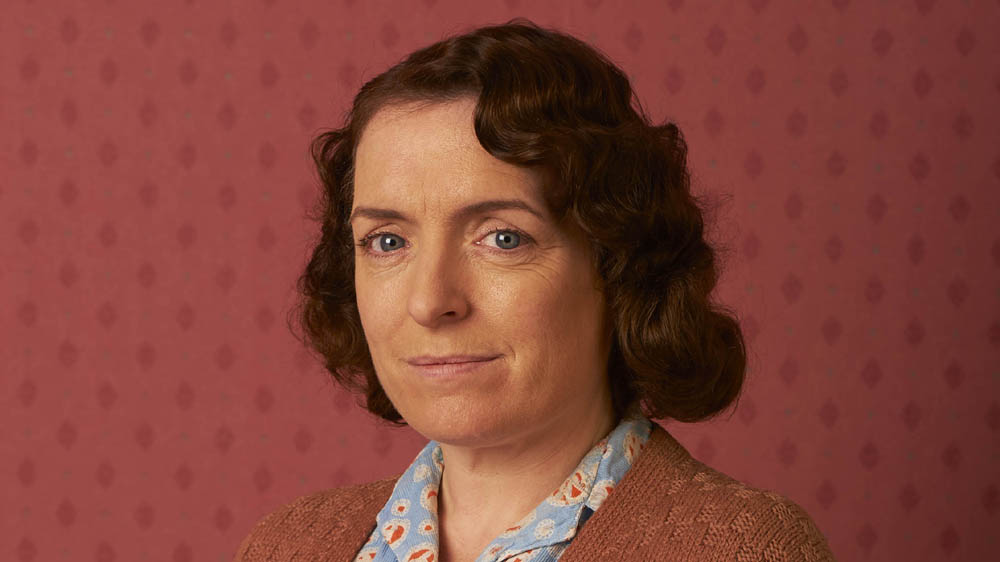
Last autumn a new debuted on PBS called “Home Fires” which features a group of women living in England prior to and during WWII. Though they were fictional, I was blown away by the strength of these ladies. I grew up hearing about America’s home front and how the women were the ones to hold down the fort while the men were away. Living in England, though, being in such close proximity of Europe, the bombings, the constant terror…I couldn’t really imagine until I watched this show. The music, the cinematography, the acting, the characterization – just perfect. I was sad to learn that after season 2, Home Fires was not renewed and well not be returning. It did well in the ratings, but for whatever cockamamie reason, it will not be back.


(From this point on there are spoilers for Season 1.)

There are two characters that really struck a chord with me: Steph Farrow and Pat Simms. 


Steph is a no-nonsense, farmer’s wife who has a son to raise, and who is her husband’s equal in every sense of the word. When her husband feels called to go to war, she encourages him to do so, and then she and their son run the farm while he is away. She is strong, intelligent, and capable. Her only stumbling block is that she can’t read. But with the help of a new teacher in town, she overcomes that as well.


Now Pat Simms, she too is a strong woman, but her strength is channeled in a different way. Pat is married to Bob Simms, a one-hit wonder novelist who is physically, verbally, and emotionally abusive. He thinks he is some kind of English Ernest Hemingway. Bob might be mentally ill (it is alluded to when he is drugged with lithium salts by a well-meaning friend of Pat’s and he suddenly becomes docile - seriously, you have got to watch this show) and I feel sorry that he can’t receive the proper treatment, but whatever his reason, he has no right to be abusive to Pat. Pat is one of the sweetest, kindest, giving characters on the show, and she continues to be so, despite her circumstances. Through some quick thinking, the two of her friends manage to send Bob off to be a war correspondent, freeing Pat of him.

Though I love Steph, it is Pat who has become my favorite. She is in a similar situation that the heroine of my Great Depression novel is. Divorce was looked down upon, society couldn’t intervene, and Pat had no place to turn to for help.


Though Home Fires was only a two season show, I look forward to watching the second season. I hear there is a cliff-hanger ending that will no doubt frustrate me because the questions will never be answered, but it will be worth watching it. 

Thursday, May 7, 2015

“Women Heroes of World War I: 16 Remarkable Resisters, Soldiers, Spies, and Medics,” by Kathryn J. Atwood


BOOK DESCRIPTION
In time for the 2014 centennial of the start of the Great War, this book brings to life the brave and often surprising exploits of 16 fascinating women from around the world who served their countries at a time when most of them didn’t even have the right to vote. Readers meet 17-year-old Frenchwoman Emilienne Moreau, who assisted the Allies as a guide and set up a first-aid post in her home to attend to the wounded; Russian peasant Maria Bochkareva, who joined the Imperial Russian Army by securing the personal permission of Tsar Nicholas II, was twice wounded in battle and decorated for bravery, and created and led the all-women combat unit the “Women’s Battalion of Death” on the eastern front; and American journalist Madeleine Zabriskie Doty, who risked her life to travel twice to Germany during the war in order to report back the truth, whatever the cost. These and other suspense-filled stories of brave girls and women are told through the use of engaging narrative, dialogue, direct quotes, and document and diary excerpts to lend authenticity and immediacy. Introductory material opens each section to provide solid historical context, and each profile includes informative sidebars and “Learn More” lists of relevant books and websites, making this a fabulous resource for students, teachers, parents, libraries, and homeschoolers.


ABOUT THE AUTHOR:

Kathryn J. Atwood is the author of “Women Heroes of World War II,” “Women Heroes of World War I: 16 Remarkable Resisters, Soldiers, Spies, and Medics,” and the editor of “Code Name Pauline: Memoirs of a World War II Special Agent.” She has contributed to War, Literature, and the Arts, PopMatters.com, Midwest Book Review, and Women’s Independent Press. To learn more about her, check out her website at http://kathrynatwood.com.

MY THOUGHTS:
A few weeks ago, I was contacted by author Kathryn J. Atwood and offered a free copy of her first book (Women Heroes of WWII) and in return I would do a book review of it on my blog. Then she asked if I would also do a review on her latest work, “Women Heroes of World War I: Remarkable Resisters, Soldiers, Spies and Medics.” I had some prior knowledge of WWI, although my interest mainly lies with WWII and the Holocaust. The cause of WWI stemmed from various conditions going on in Europe, mostly to do with nationalism. Unlike WWII, there was no definitive good and bad side. After four years of continual fighting, the war came to an end in 1918 and though the Allies were the victors, much of the world was still in chaos. The war spawned revolutions, economical failures and twenty years later a second world war.

During the war, on all sides, while men fought, the women stepped up and not only took on more masculine occupations, they took an active part in the war itself. From rescuing downed pilots, to spying, to nursing, women were determined to prove themselves. Of all the accounts included in this book, I think it was Edith Cavell’s story that resonated with me the most. While I was happy to see the Romanovs, Russia’s royal family, and their contributions were mentioned as well. Though a genuinely good family, they were poor rulers; however they were actively involved in the war effort. The Tsarina and her daughters nursed wounded soldiers. What surprised me was how many Russian women fought alongside the men. It was estimated that at least 1000 women fought.

I love “Women Heroes of World War I: Remarkable Resisters, Soldiers, Spies and Medics,” and may have learned more from it than I did Atwood’s previous book. It is perfect for teens, or anyone really, looking for an introduction to WWI history. Well, and women’s history too. Thank you, Kathryn Atwood for sending this book to me!

Thursday, April 23, 2015

"Women Heroes of World War II," by Kathryn J. Atwood Book Review

"All evil needs to triumph is for good men [and women] to sit and do nothing."- Sir Edmund Burke. 


BOOK DESCRIPTION:
Noor Inayat Khan was the first female radio operator sent into occupied France and transferred crucial messages. Johtje Vos, a Dutch housewife, hid Jews in her home and repeatedly outsmarted the Gestapo. Law student Hannie Schaft became involved in the most dangerous resistance work--sabotage, weapons transference, and assassinations. In these pages, young readers will meet these and many other similarly courageous women and girls who risked their lives to help defeat the Nazis. Twenty-six engaging and suspense-filled stories unfold from across Germany, Poland, the Netherlands, France, Belgium, Denmark, Great Britain, and the United States, providing an inspiring reminder of women and girls’ refusal to sit on the sidelines around the world and throughout history. An overview of World War II and summaries of each country’s entrance and involvement in the war provide a framework for better understanding each woman’s unique circumstances, and resources for further learning follow each profile. Women Heroes of World War II is an invaluable addition to any student’s or history buff’s bookshelf.


ABOUT THE AUTHOR:
Kathryn J. Atwood is the author of “Women Heroes of World War II,” “Women Heroes of World War I: 16 Remarkable Resisters, Soldiers, Spies, and Medics,” and the editor of “Code Name Pauline: Memoirs of a World War II Special Agent.” She has contributed to War, Literature, and the Arts, PopMatters.com, Midwest Book Review, and Women’s Independent Press. To learn more about her and her other books, check out her website at http://kathrynatwood.com.


MY DESCRIPTION:
“Women Heroes of WWII,” is a collection of 26 stories, each containing a tale of an inspiring woman or girl who lived and breathed during WWII. From the four corners of the world, you learn about strong individuals who did what they could to make a difference in the dark world they were living in. Some rescued Jews, others wrote illegal pamphlets, some were spies, some lived to tell their stories and some died for what they believed in. From all walks of life, from various backgrounds, different religions, and separate social classes, these ladies left the mark on the world and are excellent role models for today’s youth. Though these ladies would never think of calling themselves heroes, read their stories and discover what true heroism is.

MY THOUGHTS:
I actually borrowed and read this book a few years ago as research for a WIP of mine and loved it. A couple weeks ago I saw that they were giving it away on Goodreads and signed up for a chance to win. Imagine my surprise when I received a message from the author herself asking if I would be interested in a free copy in exchange for a book review. Not only that, she also sent me her latest book “Women Heroes of World War I: 16 Remarkable Resisters, Soldiers, Spies, and Medics,” to review as well. I give “Women Heroes of WWII” five stars, not only because of the stories of the ladies featured in this book, but because I love the writing itself. The style is easy to read, smooth but very detailed. I learned about different countries and cultures that I knew very little of, and how those places responded to the Nazis and the Holocaust.

I was thrilled to find many of my own personal heroines featured in there: Sophie Scholl, Irena Sendler and Sophia Podgorska. I was also introduced to many others that I was not too familiar with: Noor Inayat Khan (fun fact, there is a PBS documentary out about her called, “Enemy of the Reich: The Noor Inayat Khan Story”), Josephine Baker (had heard of her, of course, but had not realized all that she had done) and Martha Gellhorn (one of the greatest war correspondents of the 20th century).
I hope to lend this book to my sister that way she can write a review too. She was particularly excited to hear that Noor Inayat Khan was included, since that is a heroine of hers. But I’m selfish and plan to keep it for myself for future reference and enjoyment. Thank you, Kathryn Atwood for sending this to me.

Saturday, October 19, 2013

An Afternoon at the CANDLES Museum

(A little side note: I wrote an entry about the C.A.N.D.L.E.S. Museum back in April when Gov. Mike Pence honored Eva Mozes-Kor and Chaim Weizmann with the Sagamore of the Wabash Award. You can read about it by clicking here.)


On Friday, October 4, my sister, mother and I visited the C.A.N.D.L.E.S. Museum. It was a visit long overdue, especially for me since I am interested in and writing about the Holocaust. We went a long time ago, before the fire, when they had the old building. A couple of members at the Messianic Synagogue we are attending had introduced us to one of the men who lectures at the Museum. 


His name is Walter Sommers. He is a ninety-three year old Jewish survivor of the Nazis and a WWII veteran. He was born in turbulent post-war Germany and witnessed the rise of National Socialism. Thanks to a warning from a German friend and with the help of a cousin, Walter and his family managed to escape in January 1939 and immigrated to America. He fought in the Pacific Theater during WWII and has spent the rest of his seventy years living in Indiana.

Walter is a small man, no more than 5”5; he is a snappy dresser and relies on a cane to get around. His mind is sharp and for over two hours he talked not only about his life, but the Holocaust, the Nazis, the history of anti-Semitism and he also touched on a few current issues that our country is facing. I had the privilege of asking him a few questions that pertained to my YA WIP and one that was out of sheer curiosity.

Walter said, “Over time, we as human beings have become more tolerant, merciful and loving. Compared to the Middle Ages or even a couple hundred years ago, we are far kinder.”

 “Do you feel that we human beings are better now than we were back in WWII?” I asked.

There was a pause and he cracked a smile. “Well, I wouldn’t go that far.”


Our visit soon came to a close. We took some pictures with Walter and purchased souvenir necklaces from the gift shop. Mine reads: Tikkun Olam. It means “Repair the World.”


I don’t know if the world can ever really be repaired, but I think Walter Sommers and Eva Mozes-Kor have made a good start.

The rest of the photographs taken are up on facebook.com, but here are a few for you to enjoy.


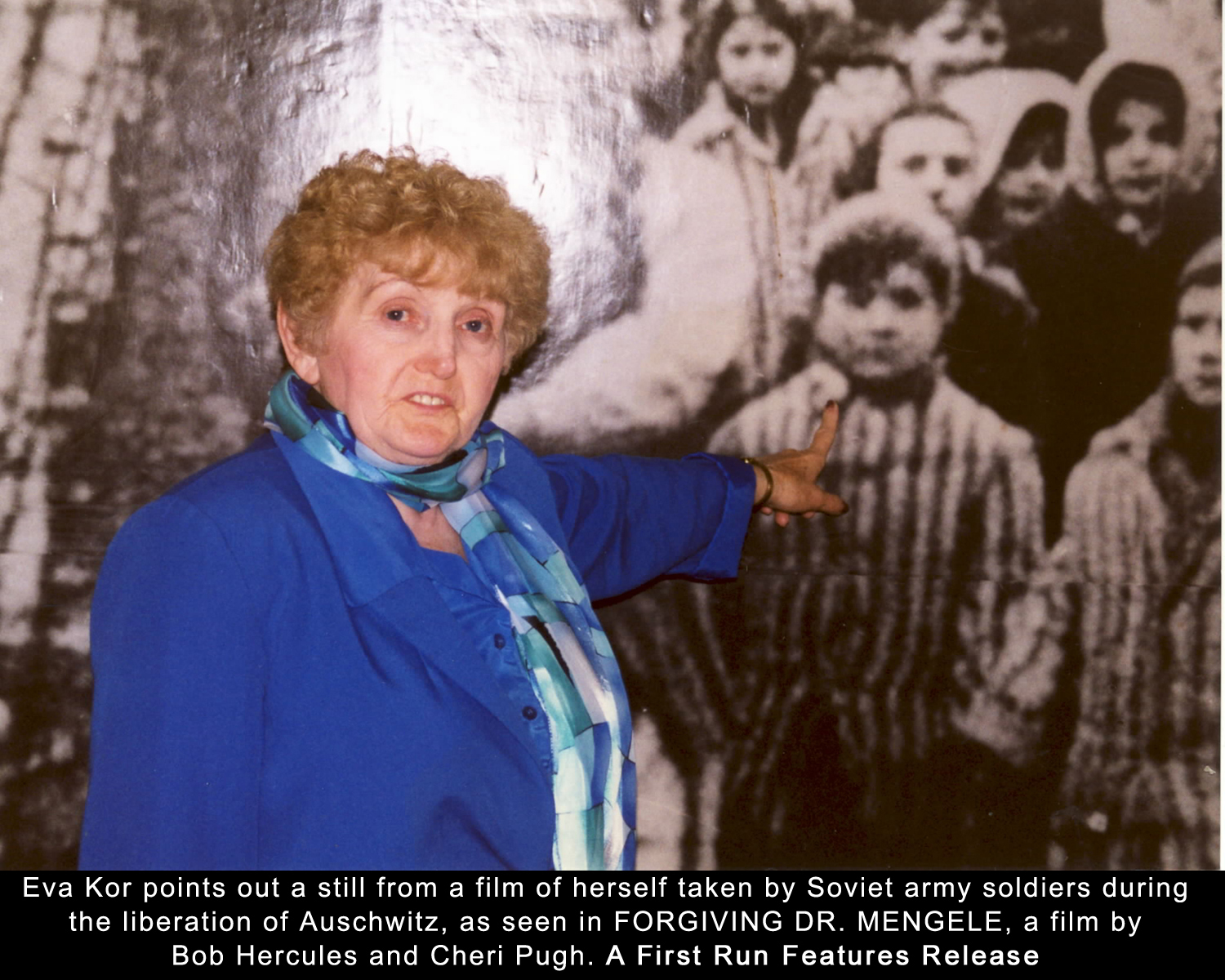
For a little background information: Eva Mozes-Kor started the C.A.N.D.L.E.S.Museum, not only to educate about the Holocaust, but to bring awareness to the overlooked fact that twins were selected by the infamous Dr. Mengele for experimentation. Eva and her twin Miriam were survivors of the experimentations,  Auschwitz and the holocaust. She has made it her life’s mission to not only share her story, but emphasize on the fact that she publicly and personally forgave Mengele and the Nazis. 


Wednesday, September 4, 2013

“The Plum Tree,” by Ellen Marie Wiseman


Author:
Ellen Marie Wiseman discovered her love of reading and writing while attending first grade in one of the last one-room schoolhouses in NYS. Her debut novel The Plum Tree - a WWII story about a young German woman trying to save the love of her life, a Jewish man - was released by Kensington in January 2013. Ellen lives peacefully on the shores of Lake Ontario with her husband and three dogs, where she loves to cook, watch movies, garden, and spend time with her granddaughters. She would love to have you join her on Facebook, www.facebook.com/EllenMarieWisemanAuthor, Twitter, @EllenMarieWise and on her web site: www.ellenmariewiseman.com


Book Description:

A deeply moving and masterfully written story of human resilience and enduring love, The Plum Tree follows a young German woman through the chaos of World War II and its aftermath.
"Bloom where you're planted," is the advice Christine Bolz receives from her beloved Oma. But seventeen-year-old domestic Christine knows there is a whole world waiting beyond her small German village. It's a world she's begun to glimpse through music, books--and through Isaac Bauerman, the cultured son of the wealthy Jewish family she works for. 
Yet the future she and Isaac dream of sharing faces greater challenges than their difference in stations. In the fall of 1938, Germany is changing rapidly under Hitler's regime. Anti-Jewish posters are everywhere, dissenting talk is silenced, and a new law forbids Christine from returning to her job--and from having any relationship with Isaac. In the months and years that follow, Christine will confront the Gestapo's wrath and the horrors of Dachau, desperate to be with the man she loves, to survive--and finally, to speak out. 
Set against the backdrop of the German homefront, this is an unforgettable novel of courage and resolve, of the inhumanity of war, and the heartbreak and hope left in its wake. 

My Thoughts:
From the moment I heard of this book, I was determined to read it. Rarely do I buy books anymore; usually I wait for them to show up at the library. For whatever reason, my library did not buy a copy so I went out and bought “The Plum Tree.” Anymore, it is a rare thing for a novel and its author to be so accurate in her research during that dark period in history. I’ve read my share of fiction set in the Holocaust and WWII and it is generally the lack of understanding of that period that drives me crazy and makes me throw the book down in disgust. Well, WWII enthusiasts and Holocaust experts, you need not fear “The Plum Tree.” Not only is this book entertaining, the author knows what she is writing about. Aside from all of that, I found it refreshing that it was the heroine, Christine, who was the strong one in the relationship. I don’t mean to imply that Isaac was weak, but he was placed in a difficult position and was stripped of his power. Without giving away the plot, be rest assured that Christine is not one to give up in the face of adversity. 

Sunday, June 16, 2013

Sagamore of the Wabash

What is “Sagamore of the Wabash?” I had never heard of it before May 30th. It is an award created by the state of Indiana and is the highest honor in this state. In the past, it has been bestowed upon “astronauts, presidents, ambassadors, artists, musicians, politicians, and citizens who have contributed greatly to Hoosier heritage.” For more information, check out http://en.wikipedia.org/wiki/Sagamore_of_the_Wabash.


Since my family and I have started attending Hope of Israel, a Messianic church, a few of the members invited us to the ceremony honoring Dr. Chaim Weizmann. Who is Chaim Weizmann? He was a chemist who developed a new technique for industrial fermentation in the production of acetone. He and his associates established Commercial Solvents Corporation right here in Terre Haute, Indiana (my great-aunt actually worked there). His discovery led to the Allied victories of WWI and WWII. He was later selected to be Israel’s first president in 1948 and served until his death in 1952.


The C.A.N.D.L.E.S. Museum hosted the ceremony. Eva Mozes-Kor is one of the museums’ founders and author of the book, “Echoes of Auschwitz.” She and her sister Miriam were Holocaust survivors and were one of the many pairs of twins tested on in Auschwitz by the infamous Dr. Menegele, during WWII. She has made trips back to Auschwitz and publicly announced that she has forgiven Dr. Mengele and the Nazis for their sadistic treatment.


Indiana Governor Mike Pence, Indiana Congressman Larry Buschon and Terre Haute’s mayor Duke Bennet were present, with the governor presenting the award posthumously to Dr. Chaim Weizman.


Towards the end of Pence’s speech, he said that he had a special announcement… that Eva Mozes Kor was also a recipient of the Sagamore award! Applause was plentiful. No one deserves the award more than Kor.


I was happy to witness this historic event, even though I didn’t have the opportunity to meet Kor or any politician there (we had to leave early). Years ago, I went to the old museum and had the honor of listening to Michael Kor, Eva’s husband, speak. Since then the C.A.N.D.L.E.S. museum had to rebuild due to a fire (intentionally set), so it was nice to see how amazing this new building is. We live only a mile or so from the museum, so maybe within the next few weeks we can get over there again and look around a bit more. I did have a great chat with a gentleman who lived in Germany as a young man and escaped before it was too late. He and his family came here to America and he later served in WWII.


Until next time!

Wednesday, December 28, 2011

Ron Paul “wouldn’t have risked American lives to end the Holocaust”

Ron Paul “wouldn’t have risked American lives to end the Holocaust”

Republican presidential hopeful Ron Paul’s past statements are coming back to haunt him – and this time it’s about the US’ role in ending World War 2 and the Holocaust.

Following a controversial revelation by a former aide to the congressman, saying that Paul “wishes Israel didn’t exist,” another blogger said Tuesday that in 2009 Paul went on the record as saying that if he were the president of the United States during WWII he “wouldn’t have risked American lives to end the Holocaust.”

Journalist Jeffrey Shapiro posted a 2009 interview he held with the GOP’s leading candidate, in which Paul clearly states that if it were up to him at the time, saving the Jews from annihilation in Europe would not have been a “moral imperative.”

“I asked Congressman Paul: If he were president of the United States during World War II would he have sent American troops to Nazi Germany to save the Jews? And the Congressman answered: No, I wouldn’t.”

Sunday, September 11, 2011

My Diary from September 11th and 12th, 2001

The following diary excerpts were written in my actual diary on September 11th and September 12th of 2001, when I was fourteen years old. Being homeschooled, I was writing about a few of the events as it transpired, therefore some of the information is incorrect. Individuals mentioned have had their names changed to protect their privacy but my very poor spelling has been retained. Also, the entries are written to Ana, which is what I named my diary at the time (as inspired from Anne Frank).

~*~
10:02am
9-11-2001
Dear Ana,
Two planes flew into the World Trade Center at 8:45am + 9:00. The World Trade Center collapsed not long ago. And a different plane flew into the Pentagon. Violence is everywhere! Is this the end times? Is Jesus coming back? Is there going to be war?
Dad is in Indianapolis. He is alright, so far.

Lord Help US! We need YOU!

More Later…

6:22pm
“We will not tolerate this!” That is what was said by several people. 4 planes were hijacked today. 50,000 people died. Our president was very angry. He is smarter than we give him credit for.
Will there be war? This is the second Pearl Harbor. Mom says this one is worse though. Tradgity is always horrible. I no longer feel safe. Will we be here tomorrow?
I haven’t been online all day. So I have no idea how my friends are. I pray they are all right. At 10:00 or 11:00pm I plan to go online and check everything out. I am going to be very busy.
At 7:30pm President Bush will announce what will happen next. So I might be able to write to you about what he says.
Just to think yesterday I had no worries, but now I am worried. Our lives were at steak 8:45am this morning. Thank you, Lord, you kept us safe.
And to think [Aunt] Stella is using this [an excuse] to stay with [her boyfriend] Henry. She claims that there are riots all over Terre Haute. If there are riots in this town, then I am Barbie Doll! And I am definitly not Barbie.

More Later…

10:23pm
Bush did not answer any of my questions. Why is this happening to us? We are America. I thought WW2 was the war to end all wars. But it seems more and more are happening. But why did this happen again? Didn’t we learn from Pearl Harbor? Bush knew. We were threatened by that Bin-Ladin guy.
Will we ever be safe again? Is this what people felt when Pearl Harbor was bombed? Will there be war? Will there be peace? What will happen tomorrow? God knows. And all my trust is with him.


9-12-2001
Dear Ana,
War. That’s what everyone is worried about. Kelsey, my internet friend, is worried all of her friends will be drafted. Its very patriotic of them to enlist. Is this WW3? I am almost certain that the Rapture is near. I just don’t feel it will happen now. I could be wrong.
Is this how Grandma felt [during Pearl Harbor]? I’m not as brave or smart as she is. How did she handle this? Well, first off she was several years older than I am. She was 23 and I am only 14½.
We’ll be all right. God will protect us. And if the Tribulation is near, then we will go to heaven.
I’ll never forget where I was when I first heard. I just got down watching “A Different World” and got up for something. Mom changed the channel and it had “Breaking News” on the screen. I saw the second plane crash into the building…
But I’ll never forget all that has happened.

Saturday, December 25, 2010

The Night God Came to Dinner

Adapted from a story by Rod Ohira

Fritz Vincken owns a bakery just outside of downtown Honolulu. He dispenses warmth and a smile along with hot buns and fresh bread to his loyal customers. Fritz has lived in the Hawaiian islands for many years now, and when he first arrived he was enchanted by the kindness and goodwill of the Islands' people. When asked, however, he admits that for him, the ideal of aloha was first learned long ago - when he was a lad of twelve.

The setting was on the other side of the world from Hawai'i, on a harsh winter night in the Ardennes Forest near the German-Belgian border. It was December, and two months had passed since Hubert Vincken brought his wife and his son Fritz to a small cottage in the Ardennes Forest for their safety. The family's home and its eighty-eight-year-old bakery in Aachen (Aix-La-Chapelle) had been destroyed in a bombing raid.

"We were isolated," Fritz recalled. "Every three or four days, my father would ride out from town on his bicycle to bring us food. When the snow came, he had to stop." His mother was concerned that their food was in very short supply, as the war seemed to be moving closer to their cottage of refuge.

By late December the cottage was no longer out of harm's way. German troops surprised and overwhelmed the Allies on December 16, turning the Ardennes Forest into a killing field.

On Christmas Eve, Elisabeth and Fritz tried to block out the distant sound of gunfire as they sat down to their supper of oatmeal and potatoes.

"At that moment, I heard human voices outside, speaking quietly," Fritz remembered. "Mother blew out the little candle on the table and we waited in fearful silence.

"There was a knock at the door. Then another. When my mother opened the door, two men were standing outside. They spoke a strange language and pointed to a third man sitting in the snow with a bullet wound in his upper leg. We knew they were American soldiers. They were cold and weary.

"I was frightened and wondered what in the world my mother would do. She hesitated for a moment. Then she motioned the soldiers into the cottage, turned to me and said, 'Get six more potatoes from the shed.'"

Elisabeth and one of the American soldiers were able to converse in French, and from him they learned news about the German offensive. The soldier and his comrades had become separated from their battalion and had wandered for three days in the snowy Ardennes Forest, hiding from the Germans. Hungry and exhausted, they were so grateful for this stranger's kindness.

A short time later that evening, four more tired soldiers came to the cottage. However, these men were German.

"Now I was almost paralyzed with fear," Fritz recalled. "While I stood and stared in disbelief, my mother took the situation into her hands. I had always looked up to my mother and was proud to be her son. But in the moments that followed, she became my hero."

"Frohliche Weihnachten," Elisabeth said to the German soldiers, wishing them Merry Christmas. She then invited them to dinner.

But before allowing them in, Elisabeth informed them she had other guests inside that they might not consider as friends.

"She reminded them that it was Christmas Eve," Fritz said, "and told them sternly there would be no shooting around here." These soldiers, still mere boys, listened respectfully to this kind and mature woman.

The German soldiers agreed to store their weapons in the shed. Elisabeth then quickly went inside to collect the weapons from the American soldiers and locked them up securely.

"At first, it was very tense," Fritz said.

Two of the German soldiers were about sixteen years old and another was a medical student who spoke some English. Although there was little food to offer, Elisabeth knew that everyone must be very hungry. She sent Fritz outside to fetch the rooster he had captured several weeks earlier.

"When I returned," Fritz recalled, "the German medical student was looking after the wounded American, assuring him that the cold had prevented infection.

"The tension among them gradually disappeared. One of the Germans offered a loaf of rye bread, and one of the Americans presented instant coffee to share. By then the men were eager to eat, and Mother beckoned them to the table. We all were seated as she said grace.

"'Komm, Herr Jesus,'" she prayed, 'and be our guest.'

"There were tears in her eyes," Fritz said, "and as I looked around the table, I saw that the battle-weary soldiers were filled with emotion. Their thoughts seemed to be many, many miles away.

"Now they were boys again, some from America, some from Germany, all far from home."

Soon after dinner, the soldiers fell asleep in their heavy coats. The next morning, they exchanged Christmas greetings and everyone helped make a stretcher for the wounded American.

"The German soldiers then advised the Americans how to find their unit," Fritz said. "My mother gave the men back their weapons and said she would pray for their safety. At that moment, she had become a mother to them all. She asked them to be very careful and told them, 'I hope someday you will return home safely to where you belong. May God bless and watch over you.'"

The soldiers shook hands and marched off in opposite directions. It was the last time Fritz or his mother would ever see any of them.

Throughout her life, Elisabeth Vincken would often say, "God was at our table" when she talked of that night in the forest.

Fritz eventually came to live in Hawaii and continued to carry this childhood lesson of brotherhood in his heart. He realized that being kind to one another and seeing beyond differences is a un iversal value, but he was surprised to discover that Hawai'i actually had a word for this ideal - aloha. When he thinks of aloha, he remembers that night long ago when everyone was welcome at the table.


~*~*~*~*~*~
For a theatrical version of this story, watch the Hallmark movie "Silent Night" with Linda Hamilton, who portrays Elisabeth Vincken.

The Gold and Ivory Tablecloth (aka "The Holocaust Tablecloth")

by Howard C. Schade

At Christmas time men and women everywhere gather in their churches to wonder anew at the greatest miracle the world has ever known. But the story I like best to recall was not a miracle -- not exactly. It happened to a pastor who was very young. His church was very old.
Once, long ago, it had flourished. Famous men had preached from its pulpit, prayed before its altar. Rich and poor alike had worshipped there and built it beautifully. Now the good days had passed from the section of town where it stood. But the pastor and his young wife believed in their run-down church. They felt that with paint, hammer, and faith they could get it in shape. Together they went to work.

But late in December a severe storm whipped through the river valley, and the worst blow fell on the little church -- a huge chunk of rain-soaked plaster fell out of the inside wall just behind the altar.
Sorrowfully the pastor and his wife swept away the mess, but they couldn't hide the ragged hole.

The pastor looked at it and had to remind himself quickly, "Thy will be done!" But his wife wept, "Christmas is only two days away!"

That afternoon the dispirited couple attended the auction held for the benefit of a youth group. The auctioneer opened a box and shook out of its folds a handsome gold and ivory lace tablecloth. It was a magnificent item, nearly 15 feet long. but it, too, dated from a long vanished era. Who, today, had any use for such a thing? There were a few halfhearted bids. Then the pastor was seized with what he thought was a great idea.

He bid it in for $6.50.

He carried the cloth back to the church and tacked it up on the wall behind the altar. It completely hid the hole! And the extraordinary beauty of its shimmering handwork cast a fine, holiday glow over the chancel. It was a great triumph. Happily he went back to preparing his Christmas sermon.

Just before noon on the day of Christmas Eve, as the pastor was opening the church, he noticed a woman standing in the cold at the bus stop. "The bus won't be here for 40 minutes!" he called, and invited her into the church to get warm.

She told him that she had come from the city that morning to be interviewed for a job as governess to the children of one of the wealthy families in town but she had been turned down. A war refugee, her English was imperfect.

The woman sat down in a pew and chafed her hands and rested. After a while she dropped her head and prayed. She looked up as the pastor began to adjust the great gold and ivory cloth across the hole. She rose suddenly and walked up the steps of the chancel. She looked at the tablecloth. The pastor smiled and started to tell her about the storm damage, but she didn't seem to listen. She took up a fold of the cloth and rubbed it between her fingers.

"It is mine!" she said. "It is my banquet cloth!" She lifted up a corner and showed the surprised pastor that there were initials monogrammed on it. "My husband had the cloth made especially for me in Brussels! There could not be another like it."

For the next few minutes the woman and the pastor talked excitedly together. She explained that she was Viennese; that she and her husband had opposed the Nazis and decided to leave the country. They were advised to go separately. Her husband put her on a train for Switzerland. They planned that he would join her as soon as he could arrange to ship their household goods across the border. She never saw him again. Later she heard that he had died in a concentration camp.

"I have always felt that it was my fault -- to leave without him," she said. "Perhaps these years of wandering have been my punishment!" The pastor tried to comfort her and urged her to take the cloth with her.
She refused. Then she went away.

As the church began to fill on Christmas Eve, it was clear that the cloth was going to be a great success. It had been skillfully designed to look its best by candlelight.

After the service, the pastor stood at the doorway. Many people told him that the church looked beautiful. One gentle-faced middle-aged man -- he was the local clock-and-watch repairman -- looked rather puzzled.

"It is strange," he said in his soft accent. "Many years ago my wife - God rest her -- and I owned such a cloth. In our home in Vienna, my wife put it on the table" -- and here he smiled -- "only when the bishop came to dinner."

The pastor suddenly became very excited. He told the jeweler about the woman who had been in church earlier that day. The startled jeweler clutched the pastor's arm. "Can it be? Does she live?"

Together the two got in touch with the family who had interviewed her. Then, in the pastor's car they started for the city. And as Christmas Day was born, this man and his wife, who had been separated through so many saddened Yule tides, were reunited.

To all who hear this story, the joyful purpose of the storm that had knocked a hole in the wall of the church was now quite clear. Of course, people said it was a miracle, but I think you will agree it was the season for it!

True love seems to find a way.

Saturday, December 19, 2009

The Night God Came to Dinner

Adapted from a story by Rod Ohira

Fritz Vincken owns a bakery just outside of downtown Honolulu. He dispenses warmth and a smile along with hot buns and fresh bread to his loyal customers. Fritz has lived in the Hawaiian islands for many years now, and when he first arrived he was enchanted by the kindness and goodwill of the Islands' people. When asked, however, he admits that for him, the ideal of aloha was first learned long ago - when he was a lad of twelve.

The setting was on the other side of the world from Hawai'i, on a harsh winter night in the Ardennes Forest near the German-Belgian border. It was December, and two months had passed since Hubert Vincken brought his wife and his son Fritz to a small cottage in the Ardennes Forest for their safety. The family's home and its eighty-eight-year-old bakery in Aachen (Aix-La-Chapelle) had been destroyed in a bombing raid.

"We were isolated," Fritz recalled. "Every three or four days, my father would ride out from town on his bicycle to bring us food. When the snow came, he had to stop." His mother was concerned that their food was in very short supply, as the war seemed to be moving closer to their cottage of refuge.

By late December the cottage was no longer out of harm's way. German troops surprised and overwhelmed the Allies on December 16, turning the Ardennes Forest into a killing field.

On Christmas Eve, Elisabeth and Fritz tried to block out the distant sound of gunfire as they sat down to their supper of oatmeal and potatoes.

"At that moment, I heard human voices outside, speaking quietly," Fritz remembered. "Mother blew out the little candle on the table and we waited in fearful silence.

"There was a knock at the door. Then another. When my mother opened the door, two men were standing outside. They spoke a strange language and pointed to a third man sitting in the snow with a bullet wound in his upper leg. We knew they were American soldiers. They were cold and weary.

"I was frightened and wondered what in the world my mother would do. She hesitated for a moment. Then she motioned the soldiers into the cottage, turned to me and said, 'Get six more potatoes from the shed.'"

Elisabeth and one of the American soldiers were able to converse in French, and from him they learned news about the German offensive. The soldier and his comrades had become separated from their battalion and had wandered for three days in the snowy Ardennes Forest, hiding from the Germans. Hungry and exhausted, they were so grateful for this stranger's kindness.

A short time later that evening, four more tired soldiers came to the cottage. However, these men were German.

"Now I was almost paralyzed with fear," Fritz recalled. "While I stood and stared in disbelief, my mother took the situation into her hands. I had always looked up to my mother and was proud to be her son. But in the moments that followed, she became my hero."

"Frohliche Weihnachten," Elisabeth said to the German soldiers, wishing them Merry Christmas. She then invited them to dinner.

But before allowing them in, Elisabeth informed them she had other guests inside that they might not consider as friends.

"She reminded them that it was Christmas Eve," Fritz said, "and told them sternly there would be no shooting around here." These soldiers, still mere boys, listened respectfully to this kind and mature woman.

The German soldiers agreed to store their weapons in the shed. Elisabeth then quickly went inside to collect the weapons from the American soldiers and locked them up securely.

"At first, it was very tense," Fritz said.

Two of the German soldiers were about sixteen years old and another was a medical student who spoke some English. Although there was little food to offer, Elisabeth knew that everyone must be very hungry. She sent Fritz outside to fetch the rooster he had captured several weeks earlier.

"When I returned," Fritz recalled, "the German medical student was looking after the wounded American, assuring him that the cold had prevented infection.

"The tension among them gradually disappeared. One of the Germans offered a loaf of rye bread, and one of the Americans presented instant coffee to share. By then the men were eager to eat, and Mother beckoned them to the table. We all were seated as she said grace.

"'Komm, Herr Jesus,'" she prayed, 'and be our guest.'

"There were tears in her eyes," Fritz said, "and as I looked around the table, I saw that the battle-weary soldiers were filled with emotion. Their thoughts seemed to be many, many miles away.

"Now they were boys again, some from America, some from Germany, all far from home."

Soon after dinner, the soldiers fell asleep in their heavy coats. The next morning, they exchanged Christmas greetings and everyone helped make a stretcher for the wounded American.

"The German soldiers then advised the Americans how to find their unit," Fritz said. "My mother gave the men back their weapons and said she would pray for their safety. At that moment, she had become a mother to them all. She asked them to be very careful and told them, 'I hope someday you will return home safely to where you belong. May God bless and watch over you.'"

The soldiers shook hands and marched off in opposite directions. It was the last time Fritz or his mother would ever see any of them.

Throughout her life, Elisabeth Vincken would often say, "God was at our table" when she talked of that night in the forest.

Fritz eventually came to live in Hawaii and continued to carry this childhood lesson of brotherhood in his heart. He realized that being kind to one another and seeing beyond differences is a un iversal value, but he was surprised to discover that Hawai'i actually had a word for this ideal - aloha. When he thinks of aloha, he remembers that night long ago when everyone was welcome at the table.


~*~*~*~*~*~
For a theatrical version of this story, watch the Hallmark movie "Silent Night" with Linda Hamilton, who portrays Elisabeth Vincken.

Tuesday, December 15, 2009

The Gold and Ivory Tablecloth (aka "The Holocaust Tablecloth")

by Howard C. Schade

At Christmas time men and women everywhere gather in their churches to wonder anew at the greatest miracle the world has ever known. But the story I like best to recall was not a miracle -- not exactly. It happened to a pastor who was very young. His church was very old.
Once, long ago, it had flourished. Famous men had preached from its pulpit, prayed before its altar. Rich and poor alike had worshipped there and built it beautifully. Now the good days had passed from the section of town where it stood. But the pastor and his young wife believed in their run-down church. They felt that with paint, hammer, and faith they could get it in shape. Together they went to work.

But late in December a severe storm whipped through the river valley, and the worst blow fell on the little church -- a huge chunk of rain-soaked plaster fell out of the inside wall just behind the altar.
Sorrowfully the pastor and his wife swept away the mess, but they couldn't hide the ragged hole.

The pastor looked at it and had to remind himself quickly, "Thy will be done!" But his wife wept, "Christmas is only two days away!"

That afternoon the dispirited couple attended the auction held for the benefit of a youth group. The auctioneer opened a box and shook out of its folds a handsome gold and ivory lace tablecloth. It was a magnificent item, nearly 15 feet long. but it, too, dated from a long vanished era. Who, today, had any use for such a thing? There were a few halfhearted bids. Then the pastor was seized with what he thought was a great idea.

He bid it in for $6.50.

He carried the cloth back to the church and tacked it up on the wall behind the altar. It completely hid the hole! And the extraordinary beauty of its shimmering handwork cast a fine, holiday glow over the chancel. It was a great triumph. Happily he went back to preparing his Christmas sermon.

Just before noon on the day of Christmas Eve, as the pastor was opening the church, he noticed a woman standing in the cold at the bus stop. "The bus won't be here for 40 minutes!" he called, and invited her into the church to get warm.

She told him that she had come from the city that morning to be interviewed for a job as governess to the children of one of the wealthy families in town but she had been turned down. A war refugee, her English was imperfect.

The woman sat down in a pew and chafed her hands and rested. After a while she dropped her head and prayed. She looked up as the pastor began to adjust the great gold and ivory cloth across the hole. She rose suddenly and walked up the steps of the chancel. She looked at the tablecloth. The pastor smiled and started to tell her about the storm damage, but she didn't seem to listen. She took up a fold of the cloth and rubbed it between her fingers.

"It is mine!" she said. "It is my banquet cloth!" She lifted up a corner and showed the surprised pastor that there were initials monogrammed on it. "My husband had the cloth made especially for me in Brussels! There could not be another like it."

For the next few minutes the woman and the pastor talked excitedly together. She explained that she was Viennese; that she and her husband had opposed the Nazis and decided to leave the country. They were advised to go separately. Her husband put her on a train for Switzerland. They planned that he would join her as soon as he could arrange to ship their household goods across the border. She never saw him again. Later she heard that he had died in a concentration camp.

"I have always felt that it was my fault -- to leave without him," she said. "Perhaps these years of wandering have been my punishment!" The pastor tried to comfort her and urged her to take the cloth with her.
She refused. Then she went away.

As the church began to fill on Christmas Eve, it was clear that the cloth was going to be a great success. It had been skillfully designed to look its best by candlelight.

After the service, the pastor stood at the doorway. Many people told him that the church looked beautiful. One gentle-faced middle-aged man -- he was the local clock-and-watch repairman -- looked rather puzzled.

"It is strange," he said in his soft accent. "Many years ago my wife - God rest her -- and I owned such a cloth. In our home in Vienna, my wife put it on the table" -- and here he smiled -- "only when the bishop came to dinner."

The pastor suddenly became very excited. He told the jeweler about the woman who had been in church earlier that day. The startled jeweler clutched the pastor's arm. "Can it be? Does she live?"

Together the two got in touch with the family who had interviewed her. Then, in the pastor's car they started for the city. And as Christmas Day was born, this man and his wife, who had been separated through so many saddened Yule tides, were reunited.

To all who hear this story, the joyful purpose of the storm that had knocked a hole in the wall of the church was now quite clear. Of course, people said it was a miracle, but I think you will agree it was the season for it!

True love seems to find a way.

Friday, March 13, 2009

I Believe...

I thought I'd share this poem that I found on the internet. It was written during WW2, on the wall of a cellar, by a Jew in the Cologne concentration camp.


"I believe in the sun
even when it is not shining
And I believe in love,
even when there's no one there.
And I belive in God,
even when he is silent.


I believe through any trial,
there is always a way
But sometimes in this suffering
and hopeless despair
My heart cries for shelter,
to know someone's there
But a voice rises within me, saying hold on
my child, I'll give you strength,
I'll give you hope. Just stay a little while.


I believe in the sun
even when it is not shining
And I believe in love
even when there's no one there
But I believe in God
even when he is silent
I believe through any trial
there is always a way.


May there someday be sunshine
May there someday be happiness
May there someday be love
May there someday be peace...."

- Unknown