Thursday, June 30, 2016

A collage


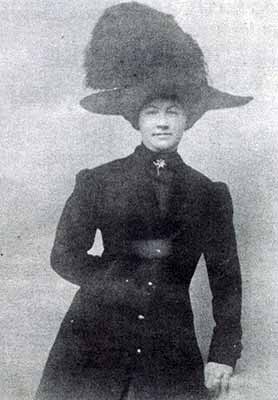
My sister, Seanna  made this for me in honor of my Great Depression novel. The actress I am using as inspiration for my heroine is Holliday Grainger. She has been in a variety of period dramas, including the recent miniseries of "Bonnie and Clyde." This very English actress was able to don on a convincing Texas drawl! Anyway, my sister created this; it really ties into the themes of my book. Isn't it gorgeous?

Thanks, sis!

You really ought to check out my sister's blog! Not only is Seanna a genius at graphics, she is a fantastic author who writes contemporary and historical dramas!

Wednesday, June 29, 2016

Femnista Has Moved!

The magazine I write for, Femnista, has moved! You can read the articles at https://femnista.wordpress.com/. You now have the ability to search the website and read through the archive of old articles. Check it out.

If you are interested in reading any of my older pieces, click here.

Monday, June 13, 2016

Sin City (i.e. Terre Haute)

Sin City (i.e. Terre Haute)
Although my Great Depression novel primarily takes place in the Prairieton/Prairie Creek area, Terre Haute is featured in there quite a bit.

The city of Terre Haute has a colorful history. While it didn’t officially earn the nickname of Sin City until 1955, the city was well on its way to earning it by the 1920’s and 1930’s. While Indiana itself has always been part of the Bible Belt, my hometown has had its struggle with sin. 


A prime example was the Red Light District…the area in town where the prostitutes lived. Terre Haute can boast that it had its very own madam. Madam Brown (originally Edith Brown, a minister’s daughter) was well-known in Terre Haute; she ran an infamous house of ill repute; her girls dressed well, had all their shots and were the cleanest members of the Oldest Profession.


When Prohibition was established, like every other city in the nation during the 1920’s and early 1930’s, Terre Haute officially went “dry.” However, there are numerous tunnels beneath the town that were used to transport illegal liquor. The tunnels still exist to this day, although they are no longer in use. Folks may not have bought liquor from a store nor could they frequent a bar, but it was not uncommon for them to have their own still and to market their product themselves.


Terre Haute was a safe haven for some bank robbers and others involved in illegal activities. I’ve heard tales of them staying at the old Terre Haute House, partying hearty. One Hoosier bank robber that has become synonymous with Robin Hood, John Dillinger was no stranger to Terre Haute. He quipped that he would never rob a bank in Terre Haute, because he would risk being railroaded by a train. 


My grandparents used to talk of an African American man who was hung off the Wabash River Bridge. My aunt said she knew a man who bragged about having one of the man’s toes. Hoosiers are known for their tall tales, but after a little research, I learned that this story was true. In 1901, when teacher Ida Finklestein was murdered, George Ward was arrested and incarcerated. A lynch mob gathered, broke into the prison, beat him and hung him off the Wabash River Bridge. His body was later taken down and burned; spectators collected “mementoes” of his remains. 

Thursday, June 2, 2016

Femnista May/June 2016 Issue


This issue of Femnista features articles on how two different worlds collide and meld together. From The Help to Zootopia to Kate Middleton, learn how people from two different worlds encountered and learned from one another.

My article on Elizabeth Gaskell's "North and South," is included. Find out what happens when cultured Margaret Hale from southern England meets the hard-as-nails John Thornton from northern England.

You may read it here.

Monday, May 16, 2016

Home Away From Home

Yesterday my family and I gathered to celebrate my aunt's birthday down at the old house in the country. This house was the house my maternal grandfather and his family built in the 1920's/1930's. The story goes that they had bought fifty acres worth of land and the family of nine lived in there through out the Great Depression and into the 1950's. By then most of the children had moved out, married and started their own families.


Art tends to imitate life. The old house wound up in my Great Depression novel. My heroine lives there after she marries her husband. Many of my grandfather's tales of Prairieton and Prairie Creek are also featured in there. Hopefully my story has done the house and the past justice.

Monday, April 11, 2016

The Write Process

A few weeks back I was asked what my writing process was. How I went about writing my novels. I became tongue-tied and couldn’t articulate a good response. Any other writers out there have that problem? Being able to write a decent piece of prose but sounding like a babbling idiot when you talk?


Every writer has a method to their madness. Some are seat of their pants writers. They sit down at the keyboard and just write whatever. I used to do that when I was younger… it was not an effective process for me. Plots would change on a whim, dialogue took forever and often sounded cheesy, and the lack of planning showed up in the story. The quality was poor. If I don’t have an idea of where I need to start or where I am going, then I had better stop before I get in too deep.

Finding a certain subject can be tricky. I’ve had my share of false starts. These are the stories that just fizzle out after the first few chapters and you know it’s better to forget about what you’ve written and start on something else. Usually my subjects of choice find me. For an example, my current WIP is set during the Great Depression in Indiana. It is probably no coincidence that I focused on Indiana so near its bicentennial. It must have been on my mind. Also, the past, history, my grandparents are often in my thoughts. My grandparents lived during the Great Depression, so it is only natural that at some point in my life I write about Hoosiers and my state. It was the Deep Calling Unto the Deep.


I usually write a detailed synopsis of an idea and then on notebook paper I write outlines of the scenes and dialog that will end up in the story. I put all of these notes on the computer and then go over them twenty or thirty times, trying to improve upon it. I separate the scenes into chapters and go from there. That’s when the real writing begins.
It takes me two or three months to write a very crappy first draft (and believe me, all first drafts are crappy). But then again, I’m a slow writer, averaging at 1000 to 1500 words (if I am very lucky) a day. My mind is only good enough to write twice a day, after lunch and in the evening. Otherwise my brain turns to mush.


If I can give any advice to any other writers out there, here it is: don’t write formula fiction. It’s a waste of time. I’ve tried it, just to get my foot in the door. Unless you have your heart is in your project, then there is no point. Better to write something you are truly passionate about than waste what talent you do have on subpar stories. Also, do not limit yourself to one story. I made the huge mistake of devoting myself to one novel for several years, and nothing came of it. Be sure to have a Plan B. And then a Plan C. And after that a Plan D. That is my two cents’ worth, take it for what it is.